 Activity, beach, adventure, safari, walking, 5-star, lazy, cultural, sightseeing, cycling, city-break, family, golfing, and romantic. You guessed! All ways to describe a holiday. As exams draw to a close, and the end of term is on the horizon, July and August present an opportunity to get away from it all, unless of course you are able to go out-of-season!
Later this month it’s Holiday Club, which for those helping is exhausting but revitalizing and great fun, and for the children it’s fun all the way. As before, there will be the mix of crafts and games, drama and outings, playing and learning, physical activities and Bible stories, great community atmosphere and worship of God. It’s another type of holiday.
During Lent this year we looked at the Biblical concept of ‘Sabbath’ as we grappled with life balance issues in contemporary society and in our own lives. These principles of creativity, restoration, and remembrance can be part of all areas of our lives and not limited to Sundays. It’s possible to have a ‘Sabbath’ moment in the middle of a weekday, by becoming conscious of God’s presence, perhaps sparked off by the beauty and complexities of nature, or the kindness of someone, or through music, or an hobby or interest. Holidays, or holy days are another example of this – good for refreshing us physically, but also an opportunity to connect with God.
Increasingly, our busy lives can crowd out God and stunt our spiritual growth. The renewed interest in spiritual retreats, even amongst those with little previous experience of Christian faith, is evidence of this. Commercial businesses are recognising their value and organising staff development events to retreat houses, and ‘The Monastery’ and ‘The Convent’ fly-on-the–wall documentaries have given us all a view inside.
This hunger for spiritual refreshment and experience is satisfied as we slow down and connect with God, and during this summer all over the world, there will be Christian conferences, holidays, pilgrimages, camps and retreats – some quiet and reflective, others noisy and instructive, but all designed to help holidays be holy days. However, God isn’t only interested in us when we are relaxing! We can know his abiding presence all the time. The famous Psalm 23 strikes the balance. ‘He makes me lie down in green pastures, he leads me besides quiet waters’ – times of drawing aside from our busy activities. Later the Psalmist says, ‘Even though I walk through the valley of the shadow of death, I will fear no evil, for you are with me’ – although referring to times of danger, anxiety and bereavement, it also speaks of God’s presence with us in the normality of every day.
I wish you a very relaxing and rejuvenating holiday however you spend it, and pray that it will give you an opportunity to connect more fully with God, and for that to be a catalyst for your daily walk with God making every day a holy day.
Blessings,
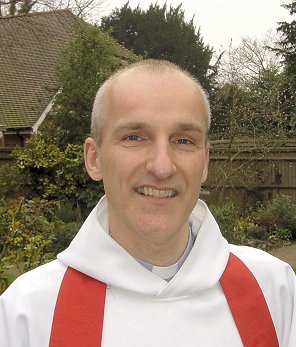
Adrian
Jun. 11th Joshua James Pike
May 13th Alastair Charles Bellwood and Michelle Laura Stephens
27th James Alexander Hope-Bruce and Lorraine Ada Louise Palmer
Jun. 3rd Glenn Thomas and Heather Marie Crouch
Cremations at Breakspear Crematoriums
May 18th Muriel Enid Flemming, aged 78
26th Vic Lee, aged 86
Irene Bargh, aged 82
May 30th Robert Horace Smith, aged 76
Jun. 2nd Ann Banfield, aged 58
6th Kath Bicheno, aged 93
12th Robert Edgington, aged 81 (followed by a memorial service at the URC)
FROM THE URC INTERIM MODERATOR
 Three experiences I have had in recent weeks came together causing me to reflect on the future direction of the Church. I spent a week at the abbey on Iona, read a book by Pete Ward called Liquid Church and watched the television programme Monastery about five men who spent forty days at Worth Abbey in 2004, returning there earlier this year.
Three different media: direct participation, a book and TV with a common theme of how the Church responds to a changing world. Pete Ward’s book was the topic for a United Reformed Church Read and Reflect day. I found it a difficult book with several points where I disagreed with the author. It contained contentious assertions such as ‘The church must change its emphasis from meeting people’s spiritual need to stimulating their desires’ and ‘A fluid church would abandon congregational structures ..’ Despite the contentious remarks the book is firmly grounded in Christ – ‘We should place significantly more emphasis upon the way that our connection to Christ makes us part of the body (Church), rather than the other way round’ and ‘The church is truly itself when it communicates Christ.’
The book with its complex interplay of ideas made only a limited impression upon me until I realised that its concepts were being worked out in Monastery and the life of Iona Abbey. The Monastery project had a profound effect for good on the lives of the five men but it also caused thousands, perhaps tens or hundreds of thousands of television viewers to think much more deeply about God and faith. The media allowed the Church to be liquid and yet the religious life at Worth Abbey was profoundly traditional. The profoundly spiritual and religious life of the monks was the basis for a powerful proclamation of the Gospel. The Church was effective because it was authentic, faithful and sacrificial.
One of the men who spent forty days at Worth Abbey returned regularly. He felt that churches in his neighbourhood were bland and shallow. There is a great temptation to compare and judge religious fellowships; it is vital that the fellowships themselves avoid such comparisons. The Iona Community bridges the gap between monastic life and local congregation. As a consequence it can feel uncomfortable but it offers a reminder that both the unseen God and the awkward neighbour are part of the Christian life.
Pete Ward condemns the idea that ‘one size fits all’ and warns that ‘liquid church does not exist yet’. I am led to reflect on the tremendous diversity that exists across the Church and to value that diversity as a crucible for change and renewal. The Church has changed over the past centuries and will continue to change. New forms of church seem far more possible and less threatening when we can experience and value the diversity that already exists within the Church.
Yours in Christ.
Tony
