|
Baptisms
Sept. 19th Rachael Louise Mary Bowker
David William John Bowker
Giles Andrew Woodland
26th Poppy Louise Kendall
Natalie Louise Marquez
Oct. 10th Helaina May Hudson
Amy Kathleen Johnson
Weddings
Sept. 15th Joel Clayton Martin and Kelly Kathryn Bennett
Cremations at Breakspear Crematorium
Sept. 14th Alma Florence Merriman, aged 93
27th Brian Geoffrey Evemy, aged 62
29th Dorothy Mason Simmons, aged 90 (after Service in St Giles’ Church)
Oct. 8th Dorothy Wickham, aged 85
Wendy O’Donnell, aged 56
BARBARA TAVENDER
Members of the Young Wives (that was!) and Ickenham Flower Club will be sorry to hear that Barbara Tavender passed away on 6 September. Her ashes were buried in the Garden of Remembrance at St Giles’ on 1st October. Having lived in many different countries, she had a network of friends worldwide and a son and daughter-in-law in Thailand who will miss her greatly.
DOROTHY MASON SIMMONS
1914 – 2004
Dorothy passed away on the 17th September at the Harefield Nursing Centre having been ill for the last few months and having celebrated her 90th birthday in hospital in July. At her personal request the funeral, which was conducted by Rev. Ken Tombs at St Giles’ Church on the 29th September, included hymns chosen by Dorothy, and was followed by cremation at Breakspear crematorium.
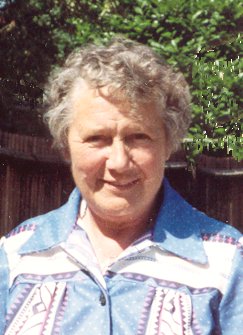 Born Dorothy Mason Walker in Stretford, Manchester on 8th July 1914, she was the daughter of an engine driver for the Great North Railway and one of three children. Her passion was for dance and amateur dramatics in her youth and for the church; a passion shared by the rest of her family. Born Dorothy Mason Walker in Stretford, Manchester on 8th July 1914, she was the daughter of an engine driver for the Great North Railway and one of three children. Her passion was for dance and amateur dramatics in her youth and for the church; a passion shared by the rest of her family.
Dorothy worked as a secretary before moving into bookkeeping where her head for figures was well suited.
She served in the Manchester Fire Service during the Second World War before marrying Walter Simmons, also from Manchester, in 1949 and moving for Walter’s work to Bradford and then Shipley in Yorkshire.
Her son Hugh was born in 1958 and soon afterwards the family moved to Ickenham when Walter was promoted to a job at the head office of Marks & Spencer in Baker Street. Within two years of moving Walter died leaving Dorothy with the choice of returning to her roots in Manchester or staying to bring up Hugh in Ickenham on her own.
Dorothy stayed and got a job at Breakspear School working in the kitchen. She subsequently moved to be Secretary of Glebe School where her bookkeeping and office skills were put to good use and where she worked until she retired at the age of 65.
Dorothy always threw herself into everything she did and over the years has been involved in many activities and areas of village life including running the junior Sunday school, helping with 1st Ickenham scouts, scoring and doing teas at Ickenham Cricket Club and arranging flowers in the church. She had always been an active and committed Christian and was a member of a prayer network as well as the Mothers’ Union and Christian Aid.
She will be sadly missed by all who knew her and particularly by her close family.
Hugh and the family would like to thank all those who sent expressions of sympathy and for the donations to Cancer Research that Dorothy had requested.
Hugh Simmons
FROM THE U.R.C. ELDERS
“Do this in memory of me” - 1 Corinthians 11:24
A Christian act of worship often includes “communion”. St Paul’s words describe this part of the service: “As often as you eat this bread and drink this wine you proclaim the Lord’s death…” - 1 Corinthians 11:26
For some earlier readers of these words, it was a matter of calling to mind a tragic event, which they had witnessed. Far more would set their thoughts on what they’d been told second or third hand.
Down through the ages theologians have tried to piece together what happened so as to better understand the impact that this death had on the world.
Fairly recently, the film “The Passion of the Christ” attempted to revisit the circumstances and to add imaginative insight to help people frame their own opinions on what they can and can’t believe of the portrayal.
Television news coverage of conflicts around the world does something similar in depicting the sacrifices of lives, often innocent, in the same battles of good and evil that have featured in every century. And, again, we have to be discerning if we hope to recognise whom, if anyone, is in the right.
There was a time when the first indication of hostilities was the actual invasion by the enemy. This meant that wars, though horrific at the location, were not escalated by pacts or alliances that might involve other nations. However, in the last century when conflict reached the point where the whole world was at war, the full reality literally came home to everyone. Scarcely was there a family or extended family group that hadn’t experienced the loss of loved ones.
Out of this realisation came the remembrance activities designed to be national acts of solidarity to support the grieving.
Now, in the age of the “jet-set” with business and leisure travel putting us all within hours of most parts of the globe, it is hard, if not impossible, to distance ourselves from events occurring in any part of the world. Increasingly, we’re having our attention drawn to international involvements that are miles from the homeland of many of the participants. Political parties compete for the “moral high ground” in saying that one or other of the decisions to take part or withdraw is the right one. Always, we know, there are lives at stake.
Whatever the outcome, the benefit of hindsight inevitably brings with it a clarity of thought about battles already fought…but, where does this leave us concerning the battles still to be fought?
If nations were to adopt the mental attitude and mindset of remembrance before engaging in battle, would the wars still go ahead? One particular battlefield is symbolised by the poppies that we wear on Remembrance Sunday; the sheer numbers of those who fell in battle makes us very much aware of the extent of the sacrifice!
At the “Last Supper” Jesus invited his disciples to enter into an act of remembering Him while He was still with them. It’s unlikely that they really understood much of the significance of what He was saying. Nothing happened to spare Jesus the final battle of good and evil – fought in a garden, the “Garden of Gethsemane”. A battle that ended in the death of Jesus! But is that the end of the story?
Let us return to the words used at communion, and this time complete the quotation:
“As often as you eat this bread and drink this wine you proclaim the Lords death until He comes.” Jesus is alive and interceding on our behalf.
We are to remember and we are to mourn; but the winners and losers in this world are not always as they seem. With regard to Jesus, we read: - 1 Corinthians 15:25
“He is destined to reign until God has put all enemies under His feet; and the last enemy to be deposed is death.”
-1 Corinthians 15:54 “…then the saying of scripture will come true:” Death is swallowed up; victory is won!” “O Death where is your victory? O Death, where is your sting?”
Dennis Dove
|
|
.gif)